

We Celebrate our Nation's Semiquincentennial!
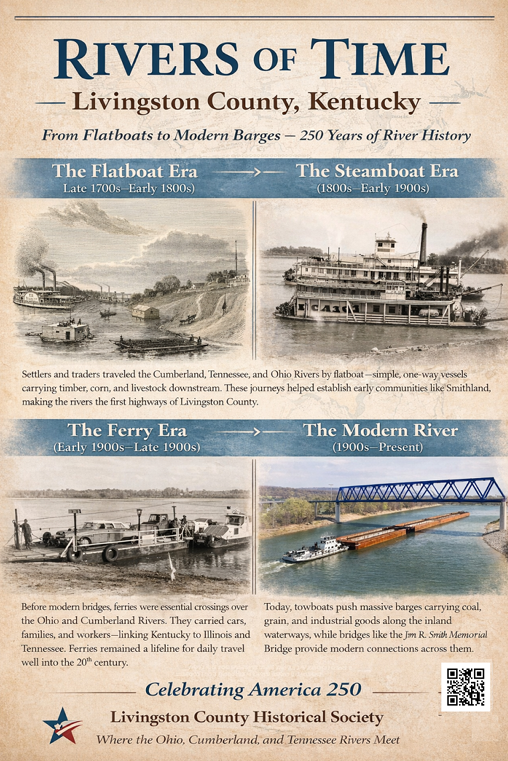
As we approach the 250th anniversary of the signing of the Declaration of Independence, the Livingston County Historical Society is looking back at the importance of the rivers and the steamboat industry.
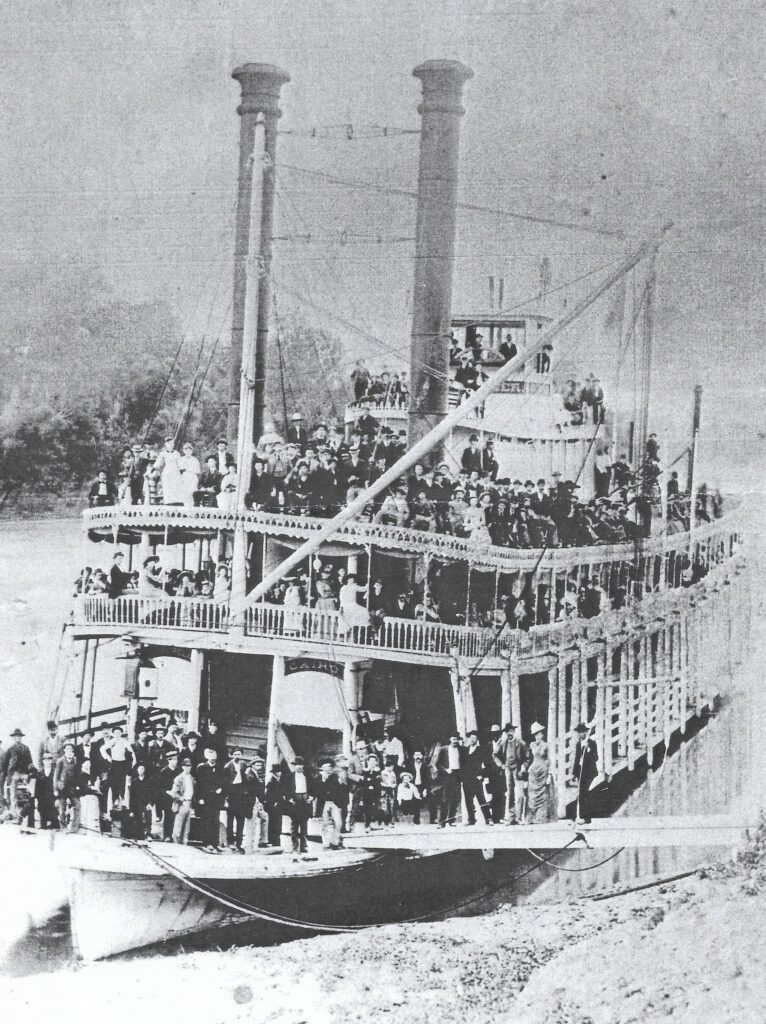
Steamship Joe Fowler
The steamboats, or packets, that once traveled the rivers and stopped at the river towns along the way, played an important role in our history. The sound of the paddlewheels and the whistle was welcomed as the boats arrived carrying passengers, supplies for the general stores, tools, farming equipment, and mail. The Joe Fowler traveled the rivers from Evansville to Paducah. The boat was built in 1888 at a cost of approximately $20,000.00. The steamer remained in operation until 1919, when it was renamed the “Crescent.”
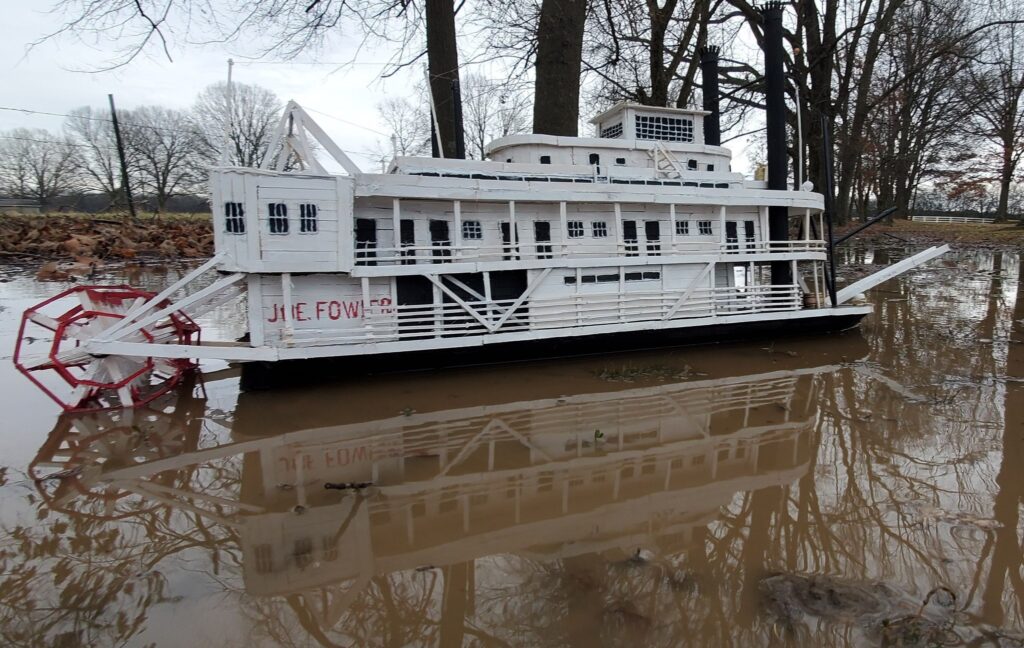
Mark Trail, artist, created this replica of the Joe Fowler.
Replicas of other steamboats created by Mark Trail are on display at the Livingston County Historical Courthouse Museum in Smithland, Kentucky.
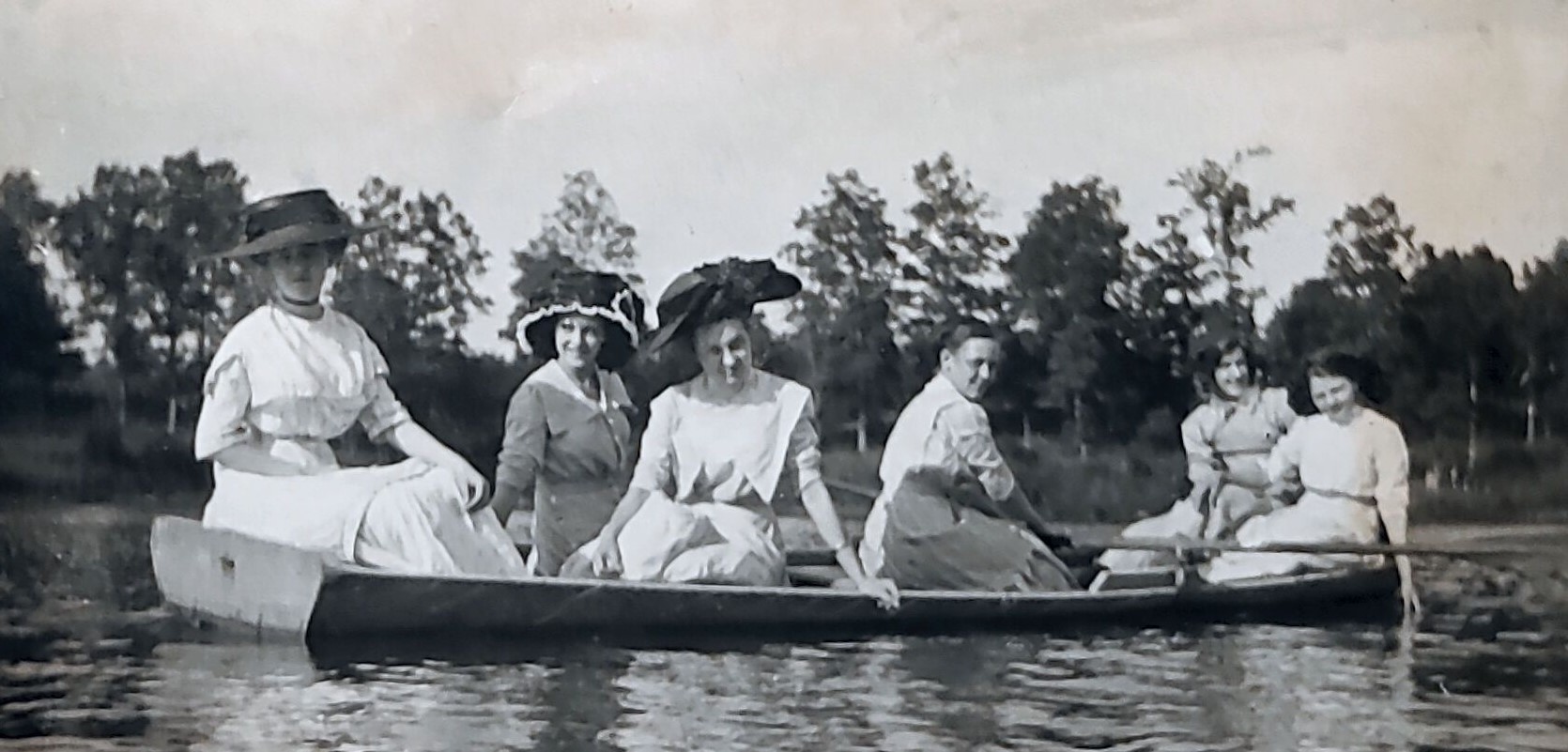
Another form of Transportation on the Rivers
Ladies enjoying a ride in the high water of 1913. From the John L. Dunn collection.
Calamities on the Ferry in Iuka, Kentucky
Shelly Dycus and Jack Burton operated the Iuka Ferry, which is believed to have been opened in 1912 or earlier. The ferry was owned by W. A. Duke, who owned the land on the Livingston County side, and Charley Baldwin, who owned the land on the Lyon County side. The ferry could transport only two cars at a time because the oars were in the middle of the boat between the cars. The story goes that after a few years, Mr. Dycus wanted to move his family to Grand Rivers. He loaded all the household belongings, hogs, cattle, chickens, and two horses on the ferry boat and headed to Dave Black Landing on the Lyon County side of the Cumberland River. A rainstorm came up as soon as they arrived at the other side. The hogs ran away, and the family lost most of their household belongings.
In July 1934, Mrs. Laney Yates of Kuttawa drowned when she lost control of her car and drove through the chains across the end of the ferry. She could not escape and was still in the car when it was pulled from the river. The car had plunged into about twenty feet of water. Mrs. Yates’ daughter-in-law, Mrs. Broad Rice, was also in the car and managed to escape through a window and was rescued by ferrymen. The women were returning from a shopping trip in Paducah. As a result of the drowning, a lawsuit was filed by George Yates on behalf of his wife, Fanny Yates, in Lyon County in March of 1935 against the Iuka Ferry Company.
In November 1948, the ferry sank with a truckload of coal. The operators of the ferry and the truck driver jumped off as the ferry went down. The truck was recovered, but the ferry was out of operation for several days.
In August of 1949, the ferry sank when 40,000 pounds of frozen fish valued at $10,000 was driven onto the ferry. The cargo was saved by the refrigerated trailer, and no one was injured. The ferry was out of service for approximately ten days.
In January 1950, high water caused problems for the Iuka Ferry. The ferry boat had motor trouble during the high water, and three carloads of people were stranded on the boat for seven and a half hours. The ferry had drifted a long distance before a mechanic from Kuttawa arrived to do repairs.
In August 1950, Mrs. Lewis Wilson’s car plunged off the ferry into the Cumberland River into 15 to 20 feet of water. She drove onto the ferry and was unable to stop her car. Mrs. Wilson ran into the guardrail, and the car broke a chain and plunged into the river. She could not open the car door and escaped through the front window. According to a story by Les McDonald in “Echoes of Yesteryear,” the ferry operators managed to save her because her bloomers were full of air, and that held her up until they could get her out. Mrs. Wilson was the wife of the cashier at the Bank of Smithland.
In the 1950s, Tiline bank robbers chose the ferry as their escape route. Percy Stinnett, chief boatswain mate on the ferry, was unaware that the men were bank robbers. In the same year, the Fredonia Bank was robbed, and Percy Stinnet testified again that he had ferried the robbers across the river the morning before the robbery.
The ferry was often closed during its operation, either due to high or low water. Despite all of this, the ferry stayed in operation until about 1952. The era of the Iuka Ferry ended after the Kentucky Dam was built. The little Eddyville Highway and the ferry were no longer feasible when the highway was built across the Kentucky Dam. The new road provided a direct route from Paducah to Eddyville without all the twists and turns. That’s progress. It is sad, though, when a way of life, such as the ferries disappear.